
One of the books of patanjali yoga sutras details about living your life the yoga way…
Patanjali divides the practice of yoga into eight parts, which he calls the Eightfold path. This path consists of eight different aspects of living yoga from physical exercises to breathing techniques to meditation to healthy values.
It is a practical guideline to ethical and mental development with the goal of freeing the individual from attachments and delusions; and it finally leads to understanding the truth about all things.
The point of the Eightfold path is to incorporate yoga into life. It encompasses the whole of yoga, revealing yoga’s true purpose: to maximize the potential of the self through the recognition of one’s own inner goodness and inner goodness in all others.
The heart of Patanjali’s teachings is the eightfold path of yoga. It is also called the eight limbs of Patanjali, because they intertwine like the branches of a tree in the forest. These aren’t commandments (although they sometimes sound like them), laws, or hard and fast rules. These are Patanjali’s suggestions for living a better life through yoga. Here are the eight limbs of Patanjali:
- A list of five values or universal guidelines for living or personal attitudes to cultivate called Yamas.
- A list of five healthy and productive habits of expressions of values called Niyamas.
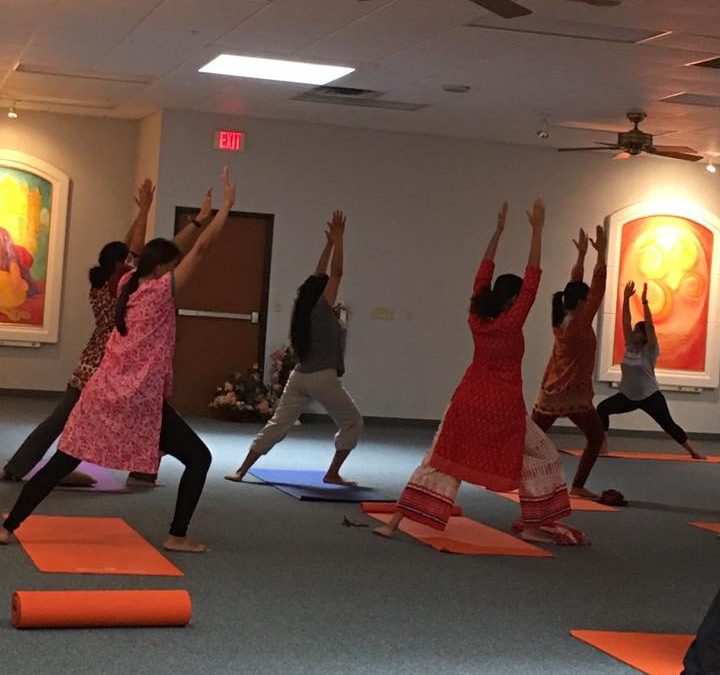
- Yoga exercises for the body called Asanas.
- Breathing techniques to energize and calm the body called Pranayama.
- The sense withdrawal, practice of calming and stilling the senses called Pratyahara.
- Focusing techniques to increase concentration called Dharana.
- Meditation or Dhyana.
- Interaction with divinity, spiritual communication called Samadhi.
The eight limbs work together: The first five steps — yama, niyama, asana, pranayama, and pratyahara — are the preliminaries of yoga and build the foundation for spiritual life. They are concerned with the body and the brain. The last three, which would not be possible without the previous steps, are concerned with reconditioning the mind. They help the yogi to attain enlightenment or the full realization of oneness with Spirit. Enlightenment lasts forever…
The eight factors of the path are always accessible to us; they are mental components which can be established in the mind simply through determination and effort. We have to begin by straightening out our views and clarifying our intentions. Then we have to purify our conduct — our speech, action, and livelihood.
Taking these measures as our foundation, we have to apply ourselves with energy and mindfulness to the cultivation of concentration and insight. The rest is a matter of gradual practice and gradual progress, without expecting quick results. For some progress may be rapid, for others it may be slow, but the rate at which progress occurs should not cause elation or discouragement.
Liberation is the inevitable fruit of the path and is bound to blossom forth when there is steady and persistent practice. The only requirements for reaching the final goal are two: to start and to continue. If these requirements are met there is no doubt the goal will be attained. This is the Dharma, the undeviating law.




Recent Comments